Dec 20, 2025
Is Aviation Only for Pilots? Career Myths Explained
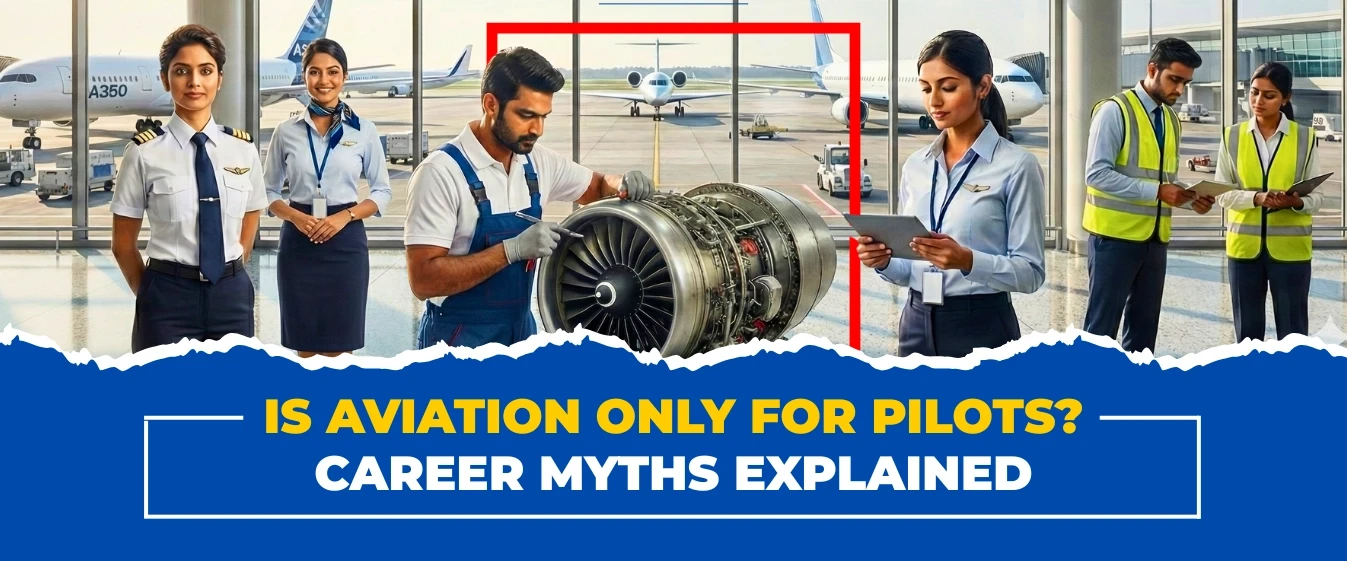

When people hear the word aviation, the first image that comes to mind is usually a pilot in the cockpit. While pilots are an important part of the industry, aviation is much bigger than flying an aircraft. In reality, pilots make up only a small fraction of the aviation workforce.
Let’s break the biggest myths and understand the wide range of career opportunities aviation actually offers.
Myth 1: Aviation Careers Are Only for Pilots
This is the most common misconception.
Fact: Aviation includes airport operations, airline management, ground handling, cargo logistics, safety, customer experience, and administration.
For every flight that takes off, there are hundreds of professionals working behind the scenes to ensure safety, coordination, and smooth operations. Pilots cannot function alone without this ecosystem.
Myth 2: You Must Study Science to Work in Aviation
Many students believe aviation is only for those with Physics and Mathematics.
Fact: Several aviation courses are open to Commerce and Arts students, especially in aviation management and operations.
Roles such as:
Airport operations executive
Airline customer service manager
Cargo & logistics coordinator
Aviation safety officer
Ground operations supervisor
focus more on management, communication, and operational skills than engineering.
Myth 3: Aviation Careers Are Limited to Airports
People often think aviation jobs exist only inside airports.
Fact: Aviation careers extend beyond terminals and runways.
Aviation professionals work in:
Airline corporate offices
Cargo hubs and logistics centers
Aviation training institutes
Safety and compliance teams
Airport planning and administration
This makes aviation a diverse and flexible industry.
Myth 4: Aviation Means Cabin Crew or Nothing Else
Cabin crew roles are popular, but they’re only one part of the industry.
Fact: Aviation offers strong management and leadership career paths.
Graduates can grow into:
Airport duty managers
Operations managers
Airline station managers
Safety & compliance heads
Senior aviation administrators
These roles offer long-term growth, stability, and leadership opportunities.
Myth 5: Aviation Has No Career Growth
Some believe aviation jobs are short-term or stagnant.
Fact: Aviation has structured career progression.
Most professionals start in entry-level roles and grow through:
Experience
Skill development
Certifications
Leadership responsibilities
With time, many move into senior management positions within airports, airlines, or aviation service companies.
What Skills Matter More Than Flying?
For non-pilot aviation careers, employers value:
Communication skills
Problem-solving ability
Customer handling
Operational understanding
Team coordination
Stress management
These skills are developed through industry-focused aviation courses, internships, and practical exposure.
Choosing the Right Aviation Course Matters
Since aviation is not limited to pilots, choosing the right course and the best aviation college is crucial.
Institutes like Chennais Amirta International Aviation focus on:
Aviation management and operations
Industry-oriented curriculum
Practical training and internships
Communication and professional grooming
This prepares students for real-world aviation roles, not just theoretical knowledge.
Final Thoughts
Aviation is not only for pilots. It is a vast industry filled with opportunities in management, operations, customer service, logistics, safety, and leadership. With the right education and exposure, students from different academic backgrounds can build successful aviation careers.
If you’re passionate about aviation but don’t want to become a pilot, there are still plenty of exciting paths waiting for you.
When people hear the word aviation, the first image that comes to mind is usually a pilot in the cockpit. While pilots are an important part of the industry, aviation is much bigger than flying an aircraft. In reality, pilots make up only a small fraction of the aviation workforce.
Let’s break the biggest myths and understand the wide range of career opportunities aviation actually offers.
Myth 1: Aviation Careers Are Only for Pilots
This is the most common misconception.
Fact: Aviation includes airport operations, airline management, ground handling, cargo logistics, safety, customer experience, and administration.
For every flight that takes off, there are hundreds of professionals working behind the scenes to ensure safety, coordination, and smooth operations. Pilots cannot function alone without this ecosystem.
Myth 2: You Must Study Science to Work in Aviation
Many students believe aviation is only for those with Physics and Mathematics.
Fact: Several aviation courses are open to Commerce and Arts students, especially in aviation management and operations.
Roles such as:
Airport operations executive
Airline customer service manager
Cargo & logistics coordinator
Aviation safety officer
Ground operations supervisor
focus more on management, communication, and operational skills than engineering.
Myth 3: Aviation Careers Are Limited to Airports
People often think aviation jobs exist only inside airports.
Fact: Aviation careers extend beyond terminals and runways.
Aviation professionals work in:
Airline corporate offices
Cargo hubs and logistics centers
Aviation training institutes
Safety and compliance teams
Airport planning and administration
This makes aviation a diverse and flexible industry.
Myth 4: Aviation Means Cabin Crew or Nothing Else
Cabin crew roles are popular, but they’re only one part of the industry.
Fact: Aviation offers strong management and leadership career paths.
Graduates can grow into:
Airport duty managers
Operations managers
Airline station managers
Safety & compliance heads
Senior aviation administrators
These roles offer long-term growth, stability, and leadership opportunities.
Myth 5: Aviation Has No Career Growth
Some believe aviation jobs are short-term or stagnant.
Fact: Aviation has structured career progression.
Most professionals start in entry-level roles and grow through:
Experience
Skill development
Certifications
Leadership responsibilities
With time, many move into senior management positions within airports, airlines, or aviation service companies.
What Skills Matter More Than Flying?
For non-pilot aviation careers, employers value:
Communication skills
Problem-solving ability
Customer handling
Operational understanding
Team coordination
Stress management
These skills are developed through industry-focused aviation courses, internships, and practical exposure.
Choosing the Right Aviation Course Matters
Since aviation is not limited to pilots, choosing the right course and the best aviation college is crucial.
Institutes like Chennais Amirta International Aviation focus on:
Aviation management and operations
Industry-oriented curriculum
Practical training and internships
Communication and professional grooming
This prepares students for real-world aviation roles, not just theoretical knowledge.
Final Thoughts
Aviation is not only for pilots. It is a vast industry filled with opportunities in management, operations, customer service, logistics, safety, and leadership. With the right education and exposure, students from different academic backgrounds can build successful aviation careers.
If you’re passionate about aviation but don’t want to become a pilot, there are still plenty of exciting paths waiting for you.

Take Off to a Bright Future
Address: Chennais Amirta International Institute of Aviation, 187, Anna Salai, Express Estate, Royapettah, Chennai, Tamil Nadu 600006.
Ph: 9363300400
Take Off to a Bright Future
Address: Chennais Amirta International Institute of Aviation, 187, Anna Salai, Express Estate, Royapettah, Chennai, Tamil Nadu 600006.
Ph: 9363300400
Take Off to a Bright Future
Address:
Chennais Amirta International Institute
of Aviation, 187, Anna Salai, Express Estate,
Royapettah, Chennai, Tamil Nadu 600006.
Ph: 9363300400